





The progress in the bilateral relations of countries from formal diplomacy to nominally strategic partnership is rather new in the diplomatic history. When relations between two or a group countries evolve to follow such a path, often a sentimental rhetoric is employed to express mutual devotion to specified domains or commitment to causes. It is not often surprising to see definitions of strategic partnerships cited as “deeper than oceans,” “all-weather friendship”, “iron brotherhood” or “higher than mountains” to show the long-term pledges of countries to one another, even though there is a likelihood that advancing time may erode either the cause, or the nature of the commitment itself for different reasons when economic, political, geopolitical or demographic interests of countries may come at cross roads and diverge. Let us remember how Ukraine and the Russian Federation had been engaged in such a strategic partnership, at the time, when Ukraine declared its independence in 1992 with the slogan of “eternally together” until the annexation of Crimea to the Russian Federation in 2014 and recently when the Ukraine-Russia war broke in February 2022. For that reason, in specific it is important to analyze how different in purpose and content the strategic partnership agreements are from other types of bilateral and multilateral agreements, and whether or how much more or less effectively they are implemented in comparison.
Basic Definitions of a Strategic Partnership
A strategic partnership or more or less strategic alliance is originally defined as a relationship between two commercial enterprises, usually formalized by one or more business contracts, which were later translated into defining relations between countries for the last 3 or 4 decades. Therefore, the model is copied from the business relations as global business practices required partnership more than ever since the second half of the 20th century. For that a strategic partnership describes a business partnership that involves the sharing of resources between two or more individuals or companies to help all involved succeed. Alliances are often formed to share resources, expertise, or market access to achieve a common goal. Unlike partnerships, the members of an alliance do not necessarily share ownership of the venture and retain their separate identities. Strategic partners are usually non-competing businesses and often share both the risks and rewards of the decisions of both companies.
Does the same logic follow the definition of the strategic partnership agreements signed between two countries? Theoretically it should. But what if it does not? As strategic partnership usually falls short of a legal partnership entity, agency, or corporate affiliate relationship. It also falls short of any legal consequence for states except for the gentlemen’s agreements between nations and their ratifying legislative bodies. For that we may say that strategic partnership requires long-term reliability under any condition and proves trustworthiness of the engaging parties.
Strategic partnerships constitute a novel form and feature of the evolving international relations system and represent a new principle for organizing international life. Seen broadly, they represent a type of special relationship and thus are not unique or new at all. However, should one take a closer look into the internal mechanisms of the partnership phenomenon and identify its distinctive foreign-political functions from its changing geostrategic context, it becomes clear that with the recalibration of the international order since the early 1990s, strategic partnerships have become instrumental to respond to the systemic and issue-oriented challenges. It is difficult to trace the path back to the first strategic partnership formed post-1990.
In 1993, China signed its first strategic partnership with Brazil, and by 2014 China had already close to 70 strategic partnerships including the one with Pakistan, which came into effect in 2023. Strategic partnerships, created a web of truly differentiated strategic links with both major and emerging powers as well as with international organizations worldwide. Among international organizations, China’s strategic partners are the Association of Southeast Asian Nations (ASEAN), the European Union (EU), the African Union(AU), the Arab League (AL) and the Community of Latin American and Caribbean States (CELAC). India has cultivated 20 strategic partnerships, including with the European Union. Japan has forged about half as many, but ‘is quickly adding to the list.
Prerequisites of Strategic Partnerships
One of the most important prerequisites of a strategic partnership is to have a level playing field between countries. Unless there is a historically unique diplomatic relation between two countries or an umbrella treaty uniting them it is hard to call any evolving relations into what we may call a strategic partnership. It is often claimed that the fast-changing global and regional scenarios, compel countries to engage in further enhanced economic, security and military cooperation. Therefore, what precedes the first prerequisite is an existing relationship of any degree between two nations.
Then the question of how any bilateral relationship can transform into a strategic one and what issues must be involved come to mind. The simplest answer to this happens to have multiple facets starting with
- Respecting each other’s security concerns;
- Having common enemies or border disputes with third parties;
- Already established, reliable partnerships in military relations, technical cooperation, infrastructure projects, and common energy interests and joint investments in energy sectors;
- Countries’ long term national policy objectives must be in harmony rather than at cross, and they must look eye to eye without having any political administration or regime change affecting the relationship.
- For a relationship to qualify as a form of strategic partnership, it needs to necessarily demonstrate: a. The partnership character of bilateral interaction (understood as a freewill-based relationship that is characterized by mutual respect and consideration, parity and loyalty); b. The (necessary minimum) convergence of strategic goals, as confirmed in official discourses of both partners; c. The shared understanding of mutual gains, and of the fact that their individually pursued goals would not be achieved as effectively when acting alone and; d. The long-term orientation of cooperation, including the progressive deepening of the strategic interaction. The USA and the UK relations can be a perfect example for this prerequisite since 1956 (since the Suez crisis and the Eisenhower intervention to the withdrawal of the British forces from Egypt); So is the Israeli-USA relations since the foundation of the Israeli state since 1947.
Saudi Arabia and the USA have been partners since 1940s and even though it is not named as strategic, it is a strategic one. Their relationship has been a longstanding security one to start with, beyond which, Saudi Arabia is the USA's largest foreign military sales customer, with more than $100 billion in active FMS cases. Additional support promotes closer cultural, educational, and institutional ties between the U.S. and Saudi Arabia. Recently Saudi Arabia is declared as one of India's most important strategic partners as they form a joint task force for the West Coast refinery project 2 days after the on defense, energy, security, education, technology, transportation, healthcare, tourism and culture, space and semiconductors as areas of possible cooperation.
A Deeper Inquiry on the Nature of Strategic Partnership
The next question that comes to mind is whether signing of any strategic partnership agreements or renaming any existing agreement as one require harmonization of domestic rules and procedures in areas or not. The simplest answer to this question is unless there is already an umbrella institution such as the EU, where harmonization of most rules and procedures are convened under common policies, in a defense treaty like NATO, harmonization of certain procedures may facilitate the partnerships or in question. Though harmonized rules and procedures must be compatible with international rules and laws or at least not temper them.
If any strategic partnership directly or indirectly involves trade of goods or specific services related to the strategic partnership in question, then the WTO rules often violated in favor of the partner in question and the Most Favored Neighbor clause is not expected to apply. For that alone to set up a new or name an already existing agreement or treaty as Strategic Partnership countries must have solid and justifiable reasons. For the sake of calling an agreement as strategic is null or exaggerated. Attaching romantic statements to stress their importance often becomes misleading.
Countries must be careful about not to let any new bilateral or group based strategic partnership agreements bridge previous commitments of countries in question. However, just to provoke, alert or incentivize a third party countries built new nominal strategic partnerships or at least appear as observers in some competing groups. For that a NATO member country becoming an observer in the Shanghai Cooperation is not unusual yet the ethical standards of such act may be questioned and may raise doubts about the part’s loyalty on both grounds. A response to the request of “choose between the either or the other” may be expected or the sincerity of the commitment of the country in question to the strategic partnership is tested.
In case of deeper integration model for a member of a regional cooperation or community, either the original community treaty is required or the bilateral treaty of any kind requires the approval by the community institutions for any new agreement of any sort to be signed by a member country. For example, for any EU member to sign a strategic partnership agreement individually with a third country, some sort of an approval is required. The weaker the original membership ties to the community in question, the unnecessary or not obligatory would be the approval process. However, the community partnership agreements are often imposed upon a new member to sign and ratify the same agreements or treaties as the community did or does.
We may have to qualify the communities in terms of the degree or the scope of cooperation from loose to deep and from economic to monetary and from civilian to military ones. A member of a monetary union may not get engage in a strategic economic partnership with another country of a competing block or a country. If it is called “strategic” somehow either it is null and void or just a window dressing or unreal.
Main Features of Strategic Partnerships in Current Times
It would be a difficult to establish the precise number of strategic partnerships across the globe today – among other reasons, not all states’ and international organizations’ foreign policy bureaucracies keep a systematic and tidy record in this regard. For some, this is a consequence of bureaucratic negligence or underperformance; for other actors, the issue of keeping a record might be of lesser to no relevance (which also shows their understanding of strategic partnerships). For another group of actors, such as China for instance, the matter is about political sensitivity – and thus an unwillingness to make multiple hierarchies of ‘strategic’, ‘comprehensive’, ‘constructive’, ‘privileged’, ‘development’ and other partnerships broadly visible. The surge of the idea of strategic partnerships is impressive. Its intensive proliferation in international relations appears phenomenal also because the term is not a domain-innate idea.
Strategic partnerships have become a central feature of the early twenty-first century diplomatic discourse, which speaks of their rhetorical significance but also bears nasty consequences for the assessment of their policy-related significance.
Like alliances, strategic partnerships are inherently related to security issues, including the hard security, energy, water, food and finally climate security issues. As countries of regional organizations feel common threats, regarding those issues, they tend to form strategic partnerships. For the nature of the Strategic Partnerships it is said that in a strategic partnership the partners remain independent; share the benefits from, risks in and control over joint actions; and make ongoing contributions in strategic areas (particularly when companies need to acquire new capabilities within their existing business), help or support each other when conditions necessitate with respect to their individual or common competitor. How does this work for nations and states? Most often, in the same manner because the state follows the business to facilitate national company performances abroad. Therefore, strategic partnership agreements between nations often have limited scope defined by company interests abroad or joint investments of companies, origins of which are from the nations engaging in strategic partnership agreements.
A Step-by-Step Approach to Strategic Partnership
Some strategic partnership agreements are born defunct or they are nominally strategic, if there are no concrete economic relationships between countries. Therefore, to ensure the any strategic partnership relation between any country pair there must be a long-term proven, stable, undisturbed and augmenting interdependence between countries for such unbroken bonds of business relations in multiple sectors to be translated into strategic political relations. If joint committees prove fruitful results in focused areas of common interests, then countries may think about upgrading relations to a Strategic Partnership level.
A good example for this step-by-step approach is the Saudi-Singapore relations. In September 2023 Saudi Arabia and Singapore agreed to enhance relations to a Strategic Partnership, to deepen and expand mutually beneficial cooperation across all fields. Global events also urge countries to get engage in deeper and stronger relationship among themselves to overcome economic or political difficulties. Then it has become customary to call an existing relation strategic in recent years. Even traditionally engaged countries rename their existing bilateral(sectoral) arrangements fashionably as strategic to shield themselves against any imminent economic problem. However, some prudent ones still test waters first with establishing high level strategic councils before calling their historical relations as strategic partnership.
Recent attempts of Saudi Arabia and UK is a good example for it as two countries first established the Strategic Partnership Council in March 2018 to underpin relations on 2 pillars: namely economic and social, and Political and Security. Since 7 June 2023, within the framework of the Strategic Partnership Council, they have agreed to strengthen collaboration in priority areas such as Trade, Investment and Financial Services; Education, Innovation and Healthcare; Energy, Industry and Environment: Culture, Sports and Tourism in clusters.
To make existing strategic partnership agreements and the new ones more effective and viable countries often establish high level strategic cooperation councils to pave roads to some sort of partnership to identify possible areas of cooperation between nations over resources, joint projects, allocation of plants, land, harbors, airports and open communication lines to facilitate relations. Several cultural, scientific, educational agreements to get to know one another before business. Transport, telecommunication, maritime trade agreements may be simultaneously or consecutively signed and ratified.
Notable Benefits of Strategic Partnership Relations
As strategic alliances can help alleviate the costs and risks associated with new developments for business, strategic partnership between countries may provide mutual and reliable opportunities for individuals (workers, business people) and business as well as state enterprises Successful alliances in business involve four stages: awareness, exploration, commitment, and dissolution. If the same logic applies to Strategic Partnership Agreements between countries studying, exploring knowing the prospective partners current and future intentions, measuring capabilities of joint actions and calculating risks and opportunities about a partnership, and finally getting into commitments that are honored may yield successful results.
As there are organizational, economic, strategic, and political advantages in pursuing a strategic alliance for business there are similar potential and actual operational advantages for states. One of the most potent advantage appear to be in military and security related strategic partnership, which may intimidate adversaries, help prevent enemy attacks, and/or preemptive strikes on enemies by actual military cooperation or by intelligence exchange.
On the other hand, as disadvantages for business may be problematic when sharing profits, and possibly it may be difficult to share trade secrets or technology licenses, geographic, geopolitical factors, national border demarcations, cooperation in strategic sectors, state secrets and ownership of land, harbors, airports and military installations and acquisitions of strategic industries can be causes of concern.
What if one of the strategic partners suddenly changes sides and become the arch enemy of the other and becomes a competitor? Then is it possible or necessary to give up or sign off from the partnership for other opportunities without any litigation, need for arbitration or in the case of states bitter relations turning sour? Is it plausible to develop an international arbitration system for monitoring and providing early warnings to avoid disputes and harmonize or re-calibrate relations, when there is an obvious or suspected bridge of interest of one party by the other? I do not think so. If there is a bridge of interest the strategic partnership cannot hold neither can the strategic partnership agreement.
However, let us not forget that there are no permanent enemies and friends in international relations; there are only interests. Therefore, it is always possible to harmonize and recalibrate any partnership before strategic partnership is proven and/ or a partnership to be revived. Nevertheless, calling a partnership strategic or an agreement as the Strategic Partnership Agreement countries must have the necessary long-term foundations to be mutually beneficial and functional. Therefore, it is important to adopt a step by step approach for confidence building by testing waters not to complicate future of the national interests or jeopardize national interests.
Time and Events Take their Toll on Any Relations
Duration of a strategic partnership depends on mutual choices of countries and the projects involved within. There may not be an end to some of them or some clause may be included in the original text for renewal, amendment or ending of it. For business time frame of the strategic alliance contracts may vary between medium-term (5 years) or long-term (10 or 20 years), given the activity for which they are incorporated generally requires a considerably longer period of time in order to be executed successfully. For countries even though romantic rhetoric may claim to be friends forever just like it is in the case of Ukraine and Russia it may end up with aggression. If one of the partners in question of an agreement no longer acts in the best interest of its strategic counterpart agreements may automatically come to an end or depending some issues may be taken to the arbitration court. I did not come across with any clause which seemingly provide any safety nets to avoid a potential bridging of agreements since there is no legal framework for them. However, it is the full responsibility of respective state departments, national intelligence agencies to monitor how partnership pursue and provide early warning to avoid disputes. In case of irreconcilable disputes, it is also the responsibility of state agents, diplomacy and stake holders such as business partners, NGOs to harmonize or re-calibrate relations. One has to admit that even those partnerships that rest on a joint strategy, or converging individual ones, may not be effectively devised to deliver their intended outcome.
On the one hand, relations between actors may be explicitly labelled by the actors themselves as a strategic partnership, whereas in reality such relationship might not manifest much partnership, strategic relevance or either. On the other hand, as years pass circumstances change and even the strongest relationships, whether they are called strategic or not become less and less, as it is in the case of the US-Saudi relations. The US and Saudi Arabia have come to need less from one another over time, which lifted the leverage of the former over the latter somewhat if not completely. The ties that bind them together have frayed, worn away by historical events like the Arab Spring, the American shale revolution, the rise of Iran, the Russian invasion of Ukraine, and the growing economic development – and independence – of both the U.S. and Saudi Arabia. The relationship may not be broken but it is bent, riven by mutual distrust but pulled back together by brute realities. that is the reason why the US no longer can put pressure on the Saudi Arabia to engage with Israel under the umbrella of the Abraham agreements, which are not yet strategic at the moment and Saudi Arabia is inclined to form other strategic partnerships within its own region.
It is important to classify strategic partnerships under the headings of substantiality of strategic partnerships in terms of their relevance and effectiveness (performative dimension); their ambitions in terms of political clout; in terms of achieving their basic goals. strategic partnerships should address ‘strategic issues’ (thus go beyond the first economic layer of interaction) and grow out of ‘cooperation on concrete issues’; they also must be sustained at the highest level of strategic interaction.
Turkiye’s Strategic Partnership Arrangements
Turkiye has been signing, ratifying, renewing and enhancing numerous agreements, memorandum of understandings (MoU) with several countries over a period of twenty years since the beginning of 2000s. It is important to find out, how many of these agreements have matured to evolve into strategic partnership agreements, fulfill their original objectives or respond to the expectations of the economic security of the country in general, energy, environmental and military security in particular. How many of them are renewed or enhanced over time, changed structure or seem dormant if not defunct are also important to inquire about. To what extent the existing High Level Strategic Cooperation Councils (HLSCCs) and/or agreements of all forms ushered Turkey to consolidate its regional and global economic and political roles is also worth discussing within the framework of the partnership and security concepts.
Do free trade agreement, security cooperation treaties, joint economic commissions complement Turkiye’s strategic partnerships? Any agreements of HLSCCs of Turkiye at large bridge the country’s specific membership positions in the EU Customs Union, NATO or its bilateral relations with the USA?
There are HLSCCs, through which Turkiye engages with countries over achieving specified common objectives on sensitive, security related strategic issues, and/ or on sectoral cooperation of similar nature. Actually Turkiye had already established councils until 2012 with 13 countries since 2006, and signed 281 agreements within that scope and many more during years that followed. First one starting with Turkiye and Brazil in 2012, which has not truly helped relations improve further so far. Therefore, it nominally exists, but actually proves to be insignificant.
During the years that followed Turkiye then set up special councils with Iraq, Syria, Russia, Greece, Azerbaijan, Lebanon, Pakistan, Ukraine, Kyrgyzstan, Egypt, Bulgaria and Kazakhstan. Also a quartet of HLSCCs was formed between Turkiye, Syria, Jordan and Lebanon on June 10, 2010. A total of 25 council meetings took place during those years as a total of 281 agreements were signed during those meetings. The agreements were on the fields of commerce, science, technology, industry, energy, defense, banking, visa procedures, tourism, health, agriculture, infrastructure, transportation, development, education, communications, culture and environment.
Among the new HLSCCs that is worth mentioning comes the Turkiye and Greece HLSCC, which aims at addressing various issues of Turkish-Greek relations at high level, thus contributing to progress in existing and prospective areas of cooperation, and rendering an “institutional” ground for Turkish-Greek relations. Four HLCC meetings have so far been held. Does the presence of such HLSCC meeting make Turkey and Greece two Strategic Partners? No it does not particularly because the two countries often engage in extreme conflicting situations than partnership of any strategic nature.
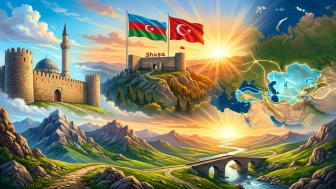
There is also a Pakistan – Turkiye HLSCC through which “An Ever Closer Strategic Partnership” is sought in an undetermined future. Both sides agreed to encourage their businessmen to establish Joint Ventures in industrial sectors and cooperate in the field of e-commerce. Among all the countries listed above Azerbaijan is the only country with which the HLSCC transformed into a strategic partnership with Turkiye with all the forward looking and lasting aspects so far. In fact, the Agreement on Strategic Partnership and Mutual Support between Azerbaijan and Turkiye for strategic partnership and security co-operation was signed at Baku in 2010. Under the terms of the treaty, both Turkiye and Azerbaijan pledged to support each other "using all possibilities" in the case of a military attack or aggression against either of the countries. This is a good example of a step-by-step process, in which, cultural and historical factors facilitated and economic, military and energy based mutual interests converged. Turkiye-Azerbaijan Strategic Partnership has strong foundation further strengthen by sectoral cooperation like, Baku-Tbilisi-Ceyhan, and TANAP pipelines, STAR oil refinery, military cooperation, trade and investment.
Turkiye has also developed closer relationship with Uzbekistan and both countries show mutual benefit to extend it to a strategic partnership in coming years. After the meeting of the Strategic Cooperation Council in 2020, in a joint statement both countries outlined key areas of cooperation. As the bilateral relations between Turkey and Uzbekistan, which have historically had their ups and downs, recently gained a strong and constructive functionality, the new comprehensive strategic partnership between the two most populous members of the Organization of Turkic States, seems to come to reality. For the members of the Organization of Turkic States, deeper economic cooperation with Pakistan could bring them access to the Indian Ocean via Pakistan’s ports, perhaps integrating with the China-Pakistan Economic Corridor running from the Chinese border to the Chinese-built Gwadar port on Pakistan’s coast. Trade, industry, innovation, energy, transport, education, culture, and tourism are emphasized as areas of cooperation in the following years.
Are Turkiye and the Russian Federation Strategic Partners?
Turkiye’s cooperation with Russia has been facilitated by several global, political, economic, conjectural, security-related, and individual-level factors since mid1990s. For that alone, a NATO-ally Turkey has a HLSCC with Russia under which it has established several trade and investment related relations and numerous agreements with that country leading to the construction of a nuclear power plant by Russia’s energy giant Rostam and allocating the Akkuyu port to it. There are concrete reasons that brought Moscow and Ankara together, including, their conflicting relations with the West, their mutual economic interests and regional issues like the Syrian conflict. Beyond all these, transformation of the global governance system, and similarity of their political culture based on security and personal harmony between the leaders had seemed working for paving a path towards a strategic partnership until Russian expanding military aggression against Ukraine since February 2022.Even after this event Turkiye’s role in keeping the “Grain Corridor” open to feed the world and to ensure food security make the Russia-Turkiye political intimacy tolerable up to a certain degree. Among many Turkiye-Russia Federation Strategic Cooperation agreement mainly aims energy sector from natural gas to nuclear power plant construction. Nevertheless, the Ukraine-Russia conflict since the winter of 2022 added another important layer of importance to the nature of this strategic partnership, which concerns the food security of the globe. Turkiye’s strategic legal status over the Bosporus and Dardanelle straights gave it a strong leverage through the consecutive “Grain Corridor” arrangements with additional periodic agreements with Russia helped consolidate the bilateral strategic partnerships between the two countries. Nevertheless, having the historical back pack they have over centuries of close contact, Turkiye- Russia relations may still be prone to divergence and therefore less than strategic as their national interest may come to cross roads over trade or regional security issues.
Turkiye and USA as Just Partners
This brings us to the inquiry of whether Turkiye and the USA are strategic partners or not. Over years Turkey and the USA engaged into a number of trade and investment related agreements and they are both NATO allies. Furthermore, as Turkiye remains under America’s nuclear umbrella with some U.S. nukes still stationed on the Turkish soil, the country remains as a NATO ally of the US as well. However, eyebrows were raised when Turkiye carried its relationship with Russia beyond any energy, food, trade relations into arms trade, which threatens any thought of close partnership with the USA or any other NATO ally. With particularly the second Trump administration’s more friendly approach in rhetoric towards Turkiye as well as its most recent action attempt to lift the CAATSA sanctions one may conclude that partnership between the two countries is becoming ever stronger than before. However, because in reality it is more personal than institutional, it remains to be fluid, debatable, or open to discussion. What Turkiye offers to the Trump administration and makes future pledges on behalf the future generations to deserve such personal flattering of Mr. Trump himself is unclear to the public without having any solid proof of a permanently stronger relations in return from the US congressional and societal bases. Although there are concerns regarding this evolving relations in the NATO circles, Türkiye is not suspected of any nuclear enrichment to produce a nuclear weapon. Furthermore, it is expected to sign up to the so-called nuclear ‘gold standard’ of an Agreement under the U.S. Atomic Energy Act, making it virtually impossible to develop a weapon. If it does not, it will certainly bridge its relations vis a vis USA and the NATO as it already had done so once before by purchasing S-400 missile systems from Russia in 2017.
Concluding Remarks
There has been a rapid increase in the number of strategic partnerships since 1990 as the global political order changed. Some of those agreements do not represent what they aim. Nevertheless, countries find several mutual benefits to call any bilateral and/or multilateral and regional agreements as such, some of which go into deeper partnerships, whereas many of them are only nominally real. It is important for countries to engage in different stages of cooperation to establish mutual trust and see benefits of cooperation before they enhance their existing partnerships to the level of strategic one. Nevertheless, even the strongest, the most dependable strategic partnerships with decades of proven mutual trust may weaken over time due to globally effective changes and the level of interdependency between partners may erode over time. The opposite also holds true in the sense that new issues, global challenges, opportunities and threats pave venues for new partnerships, some of which may qualify for strategic ones. One important note before I conclude is there is a difference between the academic and the political usage of the word strategic, which deserves attention. For political reasons the word strategic is lavishly or haphazardly used to emphasize even temporarily beneficial bilateral relations, which may prove to be make believes in due time without fulfilling what they pledge, whereas academically unless there is a solid long-term convergence of national interests between two countries, it becomes impossible to establish any strategic partnerships at all. For that the Turkiye-Russian Federation, and the Turkiye-USA strategic partnership agreements hold nominally true.